

廢話電子報
廢死聯盟說的話,是為《廢話》。
在2010年的死刑爭議裡,我們受封為「最邪惡的人權團體」,我們的主張,看起來確實狗吠火車,所以《廢話》也就是「吠話」。知其不可而吠之,汪汪!《廢話電子報》於2012年2月首次發刊,每個月發行的廢話電子報是廢死聯盟實踐與社會溝通的方式之一,我們期許自己用淺白、易懂的文字,透過定期的發刊,持續跟社會對話。
Singapore's Endless Killing
By Kirsten Han (韓俐穎)
Bio: Kirsten Han is a Singaporean journalist, writer, and activist. She is a member of the Transformative Justice Collective, where she works for the abolition of the death penalty and an end to the war on drugs.
The last time Omar Yacob Bamadhaj saw his daughter, it was 2018 and she was just a baby. On 16 April 2026, he was taken from his solitary cell in Singapore’s Changi Prison and hanged for importing about 1kg of cannabis into Singapore. He did not get to say a final goodbye to his little girl, who’s now nine years old. For health reasons, his wife, Maria, had not been able to travel with their daughter from Germany, where the family has lived since 2016, to Singapore. In any case, she had never been able to bring herself to explain to the child that her father was on death row. Maria wrote about this situation in a heartfelt plea to Singapore’s president, Tharman Shanmugaratnam, hoping that Omar could be granted clemency.
“We have all lived under the shadow of the death penalty for many years,” she wrote. “Please give Amal, who is nine years old this year, the opportunity to experience the joy of reconnecting with her father, and not the irrevocable pain and regret of never having gotten to know him.”
Maria’s pleas fell on deaf ears. And now Omar is gone.
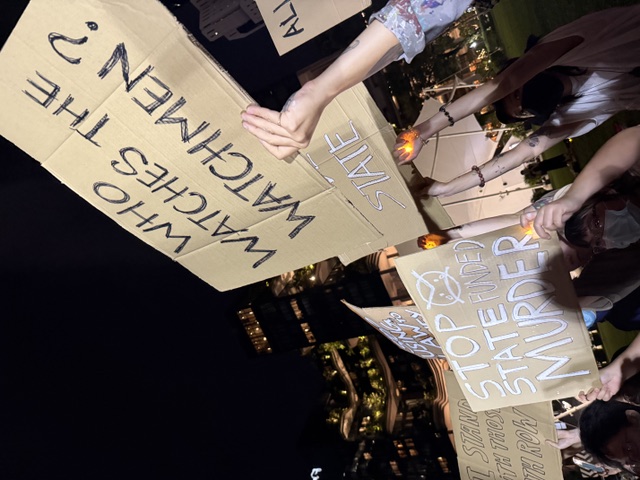
Omar's family isn't the only one that's been put through this grief and trauma this year. As I write this near the end of May, my country has already hanged 12 people so far this year—a shocking acceleration in the rate of executions. Last year, Singapore hanged a total of 17 people, the highest number of executions in a Singapore year since 2003.
In Singapore, the death penalty is largely related to our decades-long war on drugs. Every execution carried out this year was for drug-related offences. There are about 20 men currently on death row in Changi Prison, and every single one had been convicted of a drug-related offence. Under my country's Misuse of Drugs Act, the death penalty is mandatory for importation or trafficking of controlled drugs over a certain threshold, such as 15g of heroin, or 500g of cannabis. There are also presumption clauses that can be triggered to require the accused person to prove that they didn't know the nature of what was in their possession, or that what they had wasn't for the purposes of trafficking. These presumptions can be incredibly difficult to overcome because it isn't sufficient to establish the existence of reasonable doubt; one has to rebut them on a balance of probabilities, meaning that the judge has to be persuaded that presumptions are more likely than not to be wrong.
The People's Action Party (PAP) government introduced the death penalty for drug offences in 1975. Since then, every successive PAP administration—and, throughout Singapore's history as a sovereign state, they've never lost an election, ever—has taken the position that the death penalty is important and necessary because it deters drug trafficking and keeps Singaporeans safe. According to their narrative, capital punishment is needed to save lives because it keeps drugs out of the country. Yet, despite hundreds of executions for drug offences over the years, drug use continues and evolves, and the arrests never stop.
When I first joined Singapore's tiny anti-death penalty movement in 2010, we had very little information about the capital punishment regime. There was no officially published list of people on death row (there still isn't). We only knew of cases, or upcoming executions, if their lawyers or family members were willing to speak with us. There were no official announcements or media reports of hangings. The only official information we would get, buried in the Singapore Prison Service's annual report, was the total number of executions carried out in the previous year.
With so little to go on, we were mainly confined to working on a case-by-case basis, focusing on the story of each individual to appeal for mercy and second chances. We tried our best to keep track of executions as they happened, but were often surprised by the final tally in the prison reports. There were always people we didn't know about, people who had been marched to the gallows and made to pay the ultimate price with most Singaporeans none the wiser.
Things changed when we started the Transformative Justice Collective in 2020. TJC doesn't just work for the abolition of the death penalty; we recognised that the death penalty is an issue of state power and violence deeply intertwined with other issues, from Singapore's war on drugs to prison conditions, policing, and surveillance. As we built our membership and base of volunteers, we gained the skills and capacity to track capital cases much more closely. We compiled our own database of people sentenced to death and intensified efforts to find out about life and conditions on death row. In 2022, for the first time, activists were able to report on every execution before it happened, drawing the public's attention to the state's alarming pace of executions after a two-year hiatus.
We were aided in this work by the men on death row and their families. Due to an unofficial moratorium and amendments to the death penalty regime that came into effect in 2013 (which allowed many prisoners to apply for re-sentencing), people had remained on death row for years, far longer than they would have otherwise. Although languishing on death row can be its own form of torture, the long years allowed both the men and their families to build relationships and trust with one another, making it easier to deliver messages and share information. Syed Suhail Syed Zin, for instance, took it upon himself to, with the help of his fellow prisoners, count how many men there were on death row—a very helpful exercise in the early days before we put together our database. He also urged his sister, one of TJC's founding members, to encourage the families of other prisoners to speak out and join the anti-death penalty movement.
Other men, like Pannir Selvam Pranthaman and Datchinamurthy Kataiah, were also courageous in their activism, even from behind bars. They fed information about death row, their fellow prisoners, and execution notices to us through their families. They pointed people our way—I once found out from someone who'd been released from death row that Pannir had memorised my phone number and was reciting it to people who he thought would need TJC's help. At his urging, Pannir's sisters started Sebaran Kasih (Spread Love), an NGO in Malaysia that supports marginalised communities and supports the movement to end the death penalty. Pannir also wrote letters, songs, and poetry from death row; in September 2025, his family launched his first poetry collection, Death Row Literature: A Collection of Poems. For his part, Datch achieved what some Singaporean lawyers had assumed to be impossible: after receiving an execution notice in 2022, he argued for a stay of execution himself and won at both the High Court and the Court of Appeal on the same day. He went on to speak for himself and other prisoners in joint legal applications for which no local lawyer could be secured—including in an application for King's Counsels from the UK and Australia to be admitted to the Singapore bar to represent Datch and three other men in a constitutional challenge against presumption clauses in Singapore's Misuse of Drugs Act.
Governments get away with the death penalty because it's rarely presented to the public with full nuance and recognition of its life-and-death stakes. Capital punishment is played up when politicians want to project themselves as 'tough on crime' or direct the public's ire towards a perceived 'public enemy'; it is kept out of sight when the realities of state killing might prove unpalatable to citizens. When people never have to confront what a death penalty regime actually looks like, it is much easier to accept and allow the government free rein to conduct themselves as they wish.
TJC's connection with the family members of persons on death row and, through them, the prisoner themselves, allowed us to put a face to the people the state otherwise blandly refers to as Prisoners Awaiting Capital Punishment. We filled Singaporeans in on their backgrounds, shedding light on the circumstances that informed their choices (or lack thereof) and led them to Changi Prison. We highlighted the ways the death penalty intersects with poverty, racism, discrimination, social stigma, and psychosocial disabilities. We prompted people to question Singapore's harsh drug policies, and to think about whether state-sanctioned killing is really the solution to ensuring well-being. We also exposed serious issues related to the mandatory death penalty and access to justice.
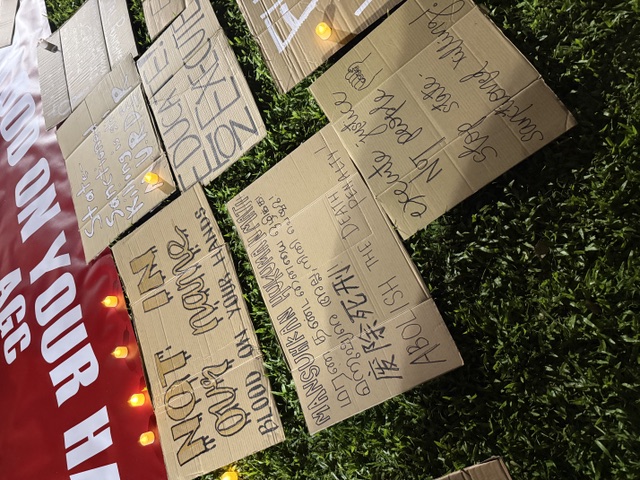
Since 2022, we've seen the abolitionist movement grow, not just in terms of TJC's members, but also the emergence of other groups and individuals unafraid to openly demand an end to the death penalty. This is no small feat in a country where activism has, for many years, been viewed with suspicion and fear, and the state responds to dissent with hostility, harassment, and oppression. Activists continue to be plagued with time-wasting police investigations—usually under overly broad legislation like the Public Order Act, which criminalises even one-person "assemblies" or "processions" without police permits (that are near impossible to obtain)—but this is no longer sufficient to deter Singaporeans from speaking out and taking action.
It's encouraging that the movement has grown, but the Singapore government has also doubled down on its killing. They have hanged 12 men in the first half of this year alone, all for drug-related offences. The state has ended the lives of all the people we've worked the most closely with—men like Syed, Datch, and Pannir—and with them, precious sources of information and stories about death row and the lives trapped within its cells. We're now at a point where, for the most part, we don't have close relationships with death row prisoners or their families, and are therefore unable to tell their stories. We've also been told that the men on death row have been shifted to different cells, spreading them out and making it more difficult for them to communicate with one another. Increasingly this year, we aren't even learning of execution notices, only finding out about hangings in the press releases that the Central Narcotics Bureau started issuing in 2022 (likely because of the attention abolitionist activism had drawn towards the death penalty).
The anti-death penalty movement isn't groping in the dark as much as we used to do, but in other aspects we're regressing to a time when information was hard to come by and there wasn't a tight-knit community of prisoners and families that we could be a part of. Given these circumstances, our struggle for abolition needs to adopt new strategies and come up with more creative ways to expose people to this issue. No one is under any illusion that this will be an easy process. As things stand, it looks like the road to the abolition of the death penalty in Singapore will be long and arduous, with many more lives sacrificed before things change. For those of us observing this cruel and inhuman system up close, this is a bitter pill to swallow, but we cannot let it demoralise the movement. We've seen how hard people on death row have fought against this brutal regime, pressing on despite all the barriers and restrictions keeping them down. They gave their all even when hope was slim and efforts seemed futile; if they did that from death row, the rest of us outside the confines of the prison complex can and should do much more.
Chinese version: 新加坡永無止境的殺戮